
I am writing this blog post as a UK citizen who doesn’t need to think about hunger or harvests, after all, our food comes from Tesco. I do not recall a time when hunger has not been a problem in Malawi. You soon learn that the rains, the rainy season and the price of fertiliser dominate Malawian’s attention and concern. Failing to harvest at least ‘12 bags of maize’ is a problem. A family can survive on one bag of maize each month.
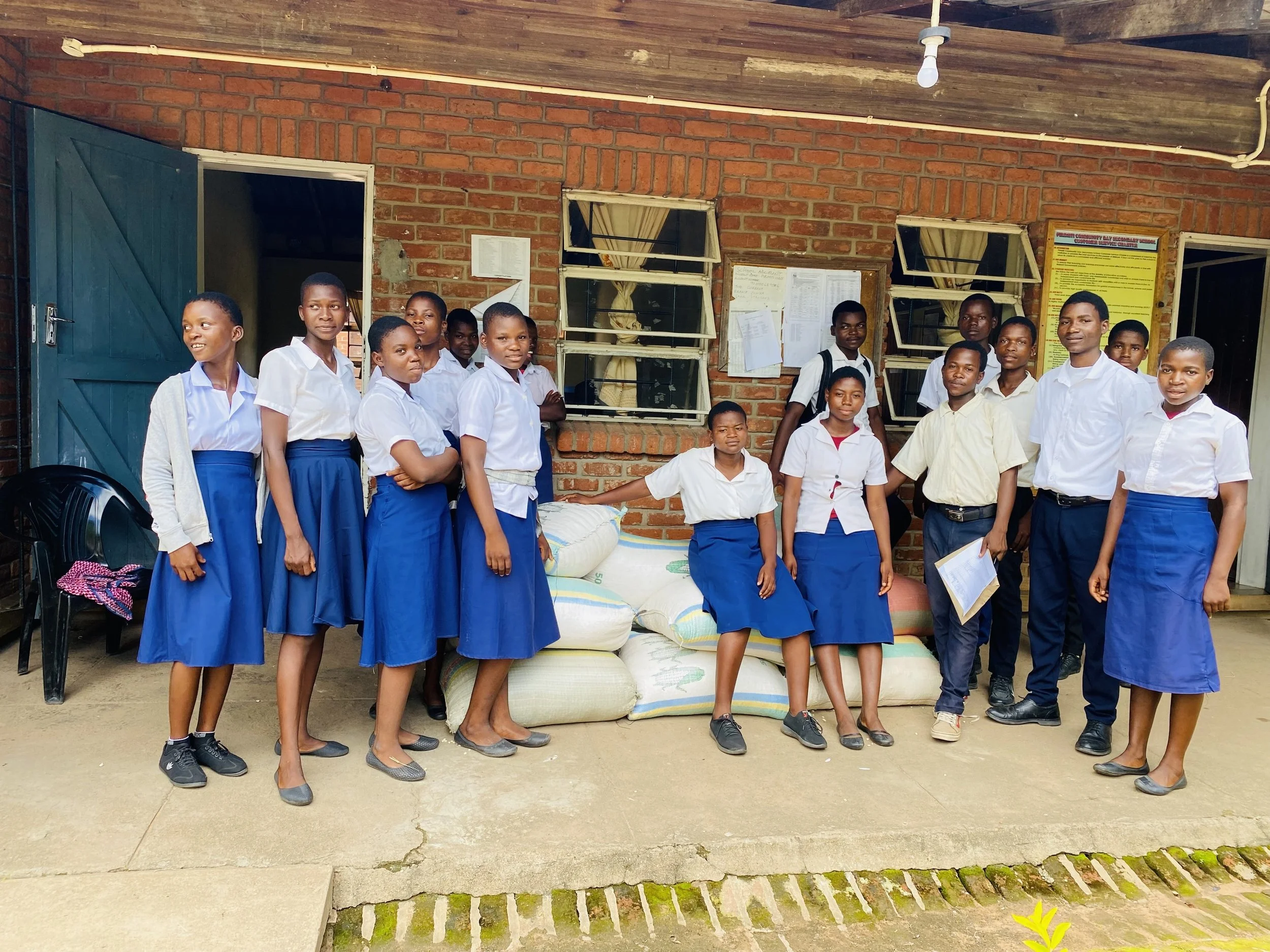
MOEP Maize distribution February 2026.
I remember the events that some of you may be familiar with in the story of ‘the boy who harnessed the wind’, perhaps you have read the book or more recently seen the film on Netflix. This year the RSC are producing a musical version of this story and I would recommend going to see it if you can. The story recounts the events of 2001 and one of our early projects failied because of the famine. Not only had there been a really poor harvest but corrupt politicians had sold some of Malawi’s maize reserves. The result was death stalked the land.
More recently the impacts of cylcone Freddy in 2023 and erratic rains in 2024 and 2025 saw destroyed crops and poor harvests. The hungry season suddenly became longer. Our own research in 2025 showed many families harvested only one bag of maize. The hungry season was going to last a whole year.
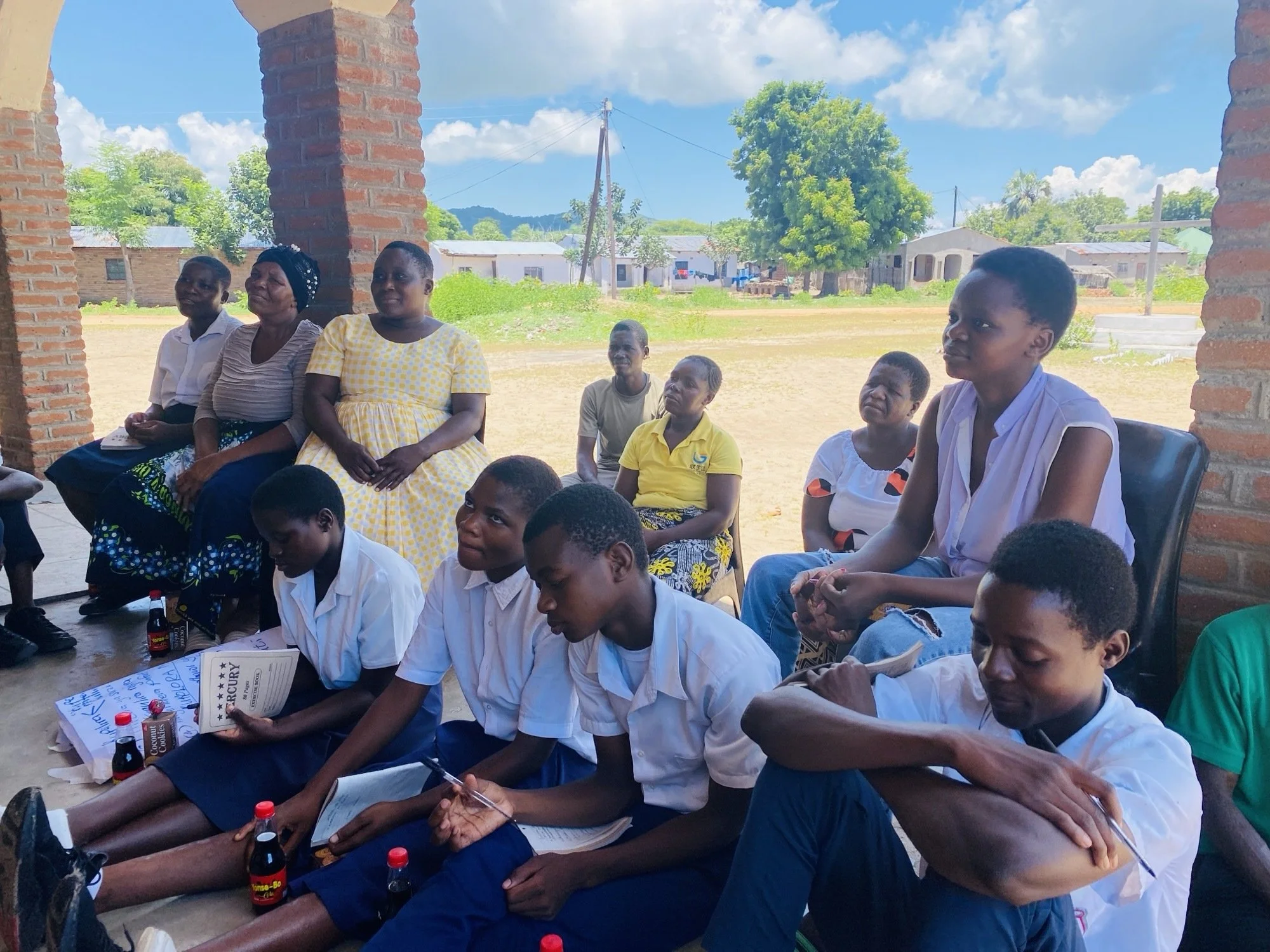
Food resilience training, Monkey Bay, February 2026.
For our orphan education programme last year was a crisis. We had students facing a year of hunger. At the same time we were dealing with project costs rising by 30% to 40% due to high inflation in Malawi. We were worried that we would have to remove students from the programme. We needed to buy maize and not just the one or two bags per student that we have normally tried to provide but more, at the same time maize was going up in price weekly. We had a great response from donors who contributed to the need and this meant we didn’t have to cover the cost from the orphan education programme, this would have resulted in reducing student numbers significantly.
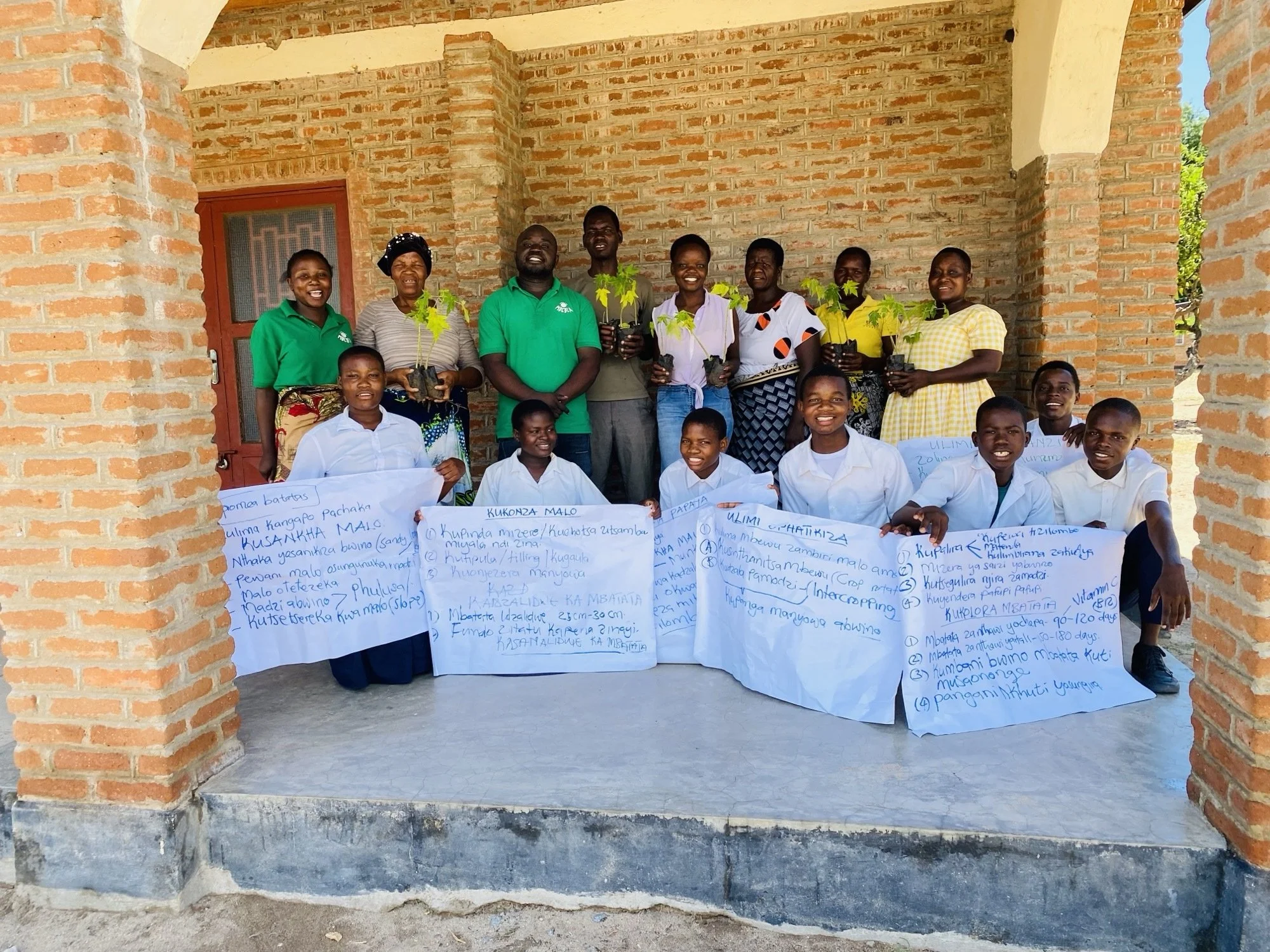
Our Mbedza staff in green - Prisca Ibbu (left) and Richard Malili (centre left) with students from Monkey Bay.
Whilst we wait to see the outcome of the harvest in the next two months, we have decided to try and introduce food resilience strategies to help our orphan education households. The focus was simple, encouraging families to grow pawpaw and sweet potatoes to improve food security and generate income. The response from parents was encouraging. Many shared that pawpaw is currently very expensive in Monkey Bay, with one pawpaw selling at up to MK3,500. This presents an opportunity for families not only to improve household nutrition but also to earn income from surplus produce. As part of the training, we distributed pawpaw seedlings and sweet potato vines to help families begin immediately. Since our students come from vulnerable households, equipping families with practical farming skills strengthens food security, improves nutrition, and creates income opportunities. When families can feed themselves and earn from what they grow, we move closer to breaking the cycle of poverty among our MOEP students.
Julian Watson