
Success in the most difficult circumstances
It is September (2026) and the new term in Malawi is just beginning. Our Mbedza Orphan Education Programme (MOEP) supports students with the help necessary to complete four years of Secondary Education. Without this support these students would not be in school. In fact most young people in Malawi are not in Secondary Education and if they start they do not manage to finish. The 2022 UNICEF study showed that 33% of children complete primary, 23% complete two years of secondary and 15% the full four years of secondary. For rural areas and amongst the poorest 20% of the population, 11% complete primary and 2% complete secondary.
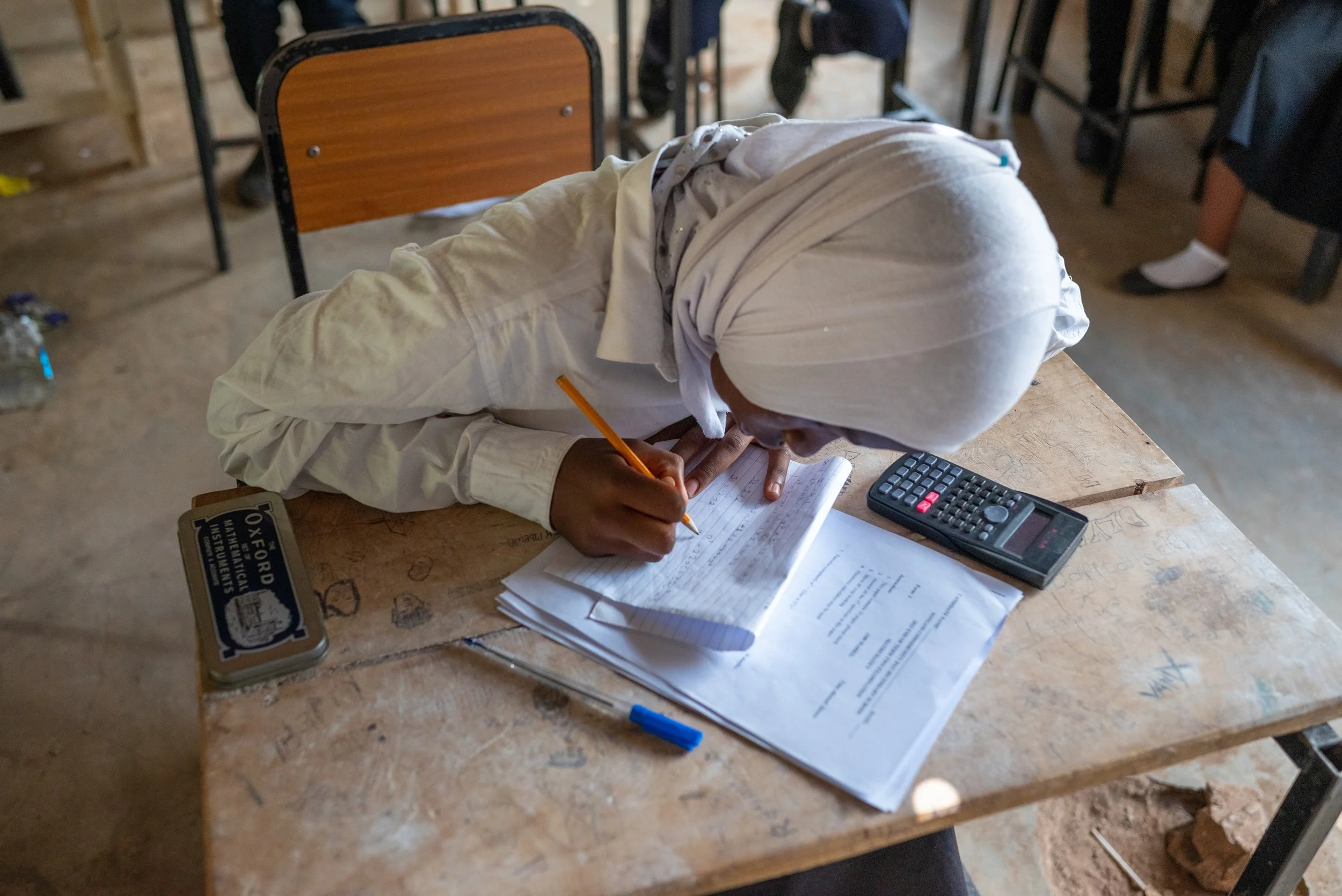
How do we measure success? The success of our programme is that our students stay in school, their attendance records are excellent and they complete four years - our completiion rate is 98%. The effort and focus required to ensure that these vulnerable students can stay in school takes many forms of intervention.
The three main causes of absence in school are hunger, inability to pay school fees and illness. Girls say they are ill when they mean it is the time of the month and they don’t have any sanitary provision. When there is no food in the home you don’t go to school, you go looking for food. In some cases you obtain food by any means necessary and for girls that can lead to very undesirable choices.
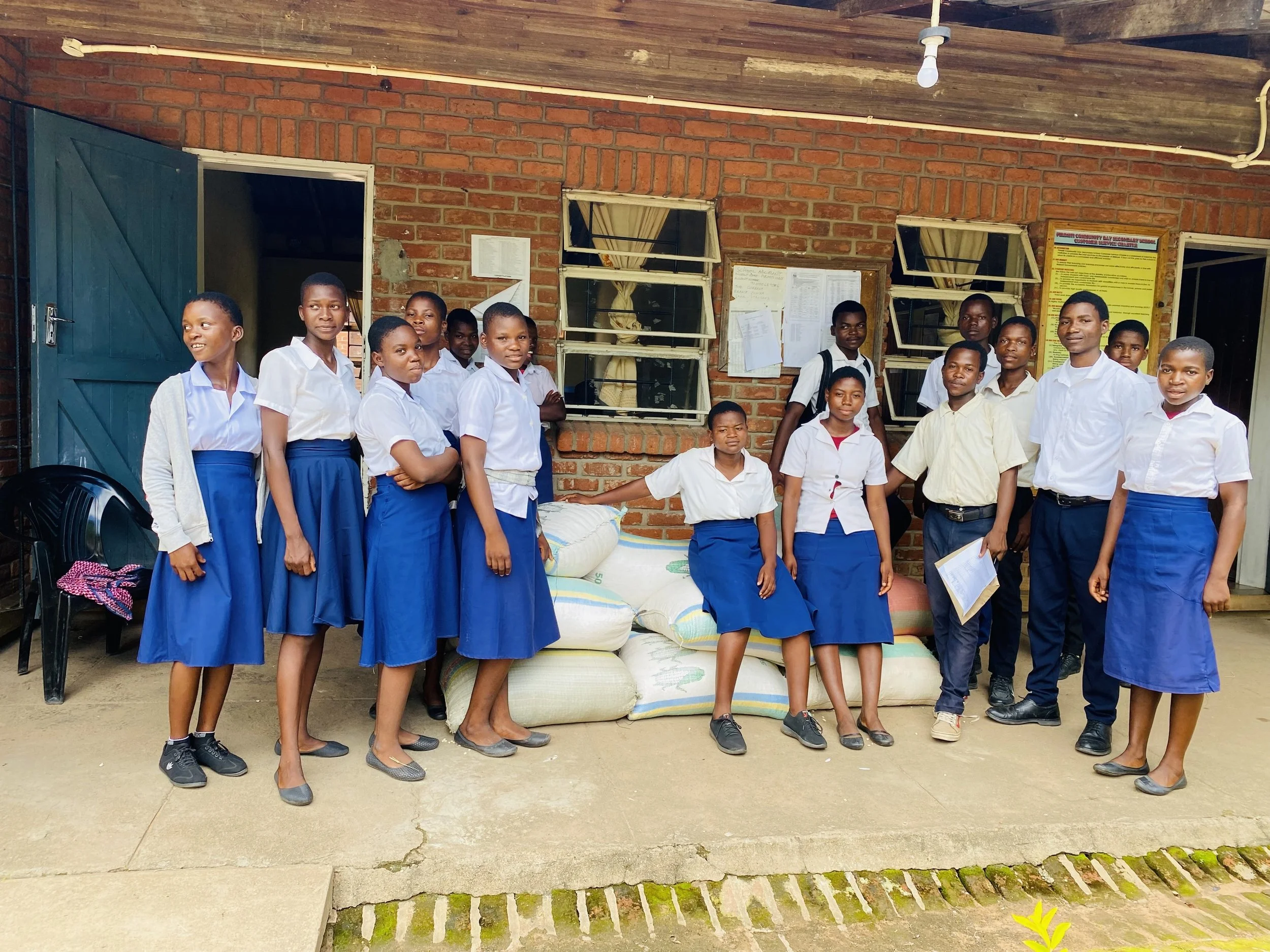
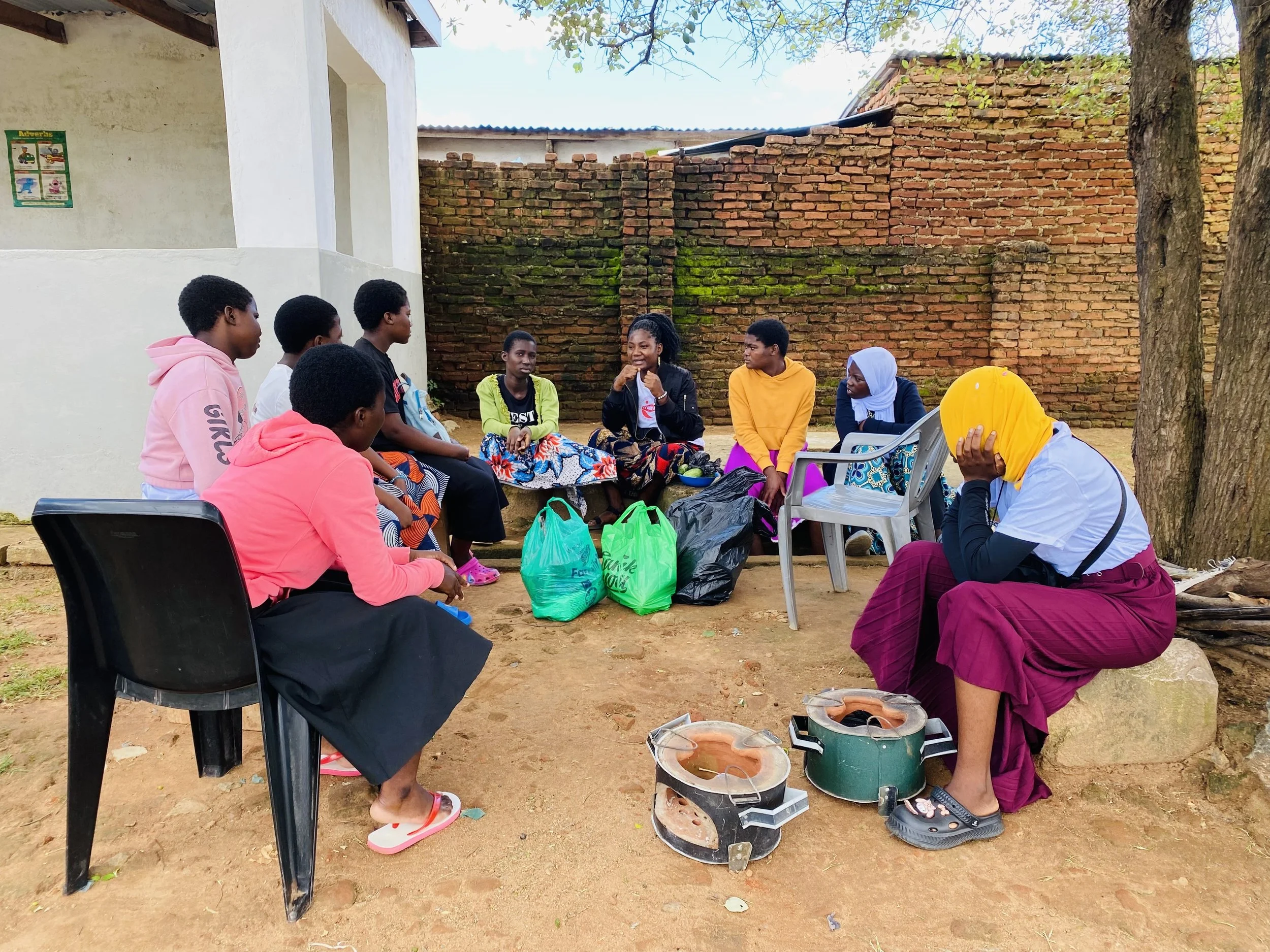
Our MOEP programme is addressing this by providing emergency food support with the provision of maize and food resilience training. This all links closely to our home visits where the home situation can be assessed. Home visits gives the team insights into each student’s food situation. (Photos below - maize distribution and food resilience training using Gamba Tinsmith stoves.)
For girls we have our sanitary kit provision. You can understand the impact of these washable sanitary kits when a student (age 16) who has no provision shares their story, she told us - 'before receiving the pads, I relied on nyanda (traditional cloth materials) for menstrual management. Nyanda became wet quickly and was difficult to manage while at school. As a result, I regularly missed classes during menstruation. I recall a painful experience when I stained my uniform shortly before break time. My friends noticed the stain and helped by lending me a chitenje(wrapper). I later requested permission from my teacher to go home.’
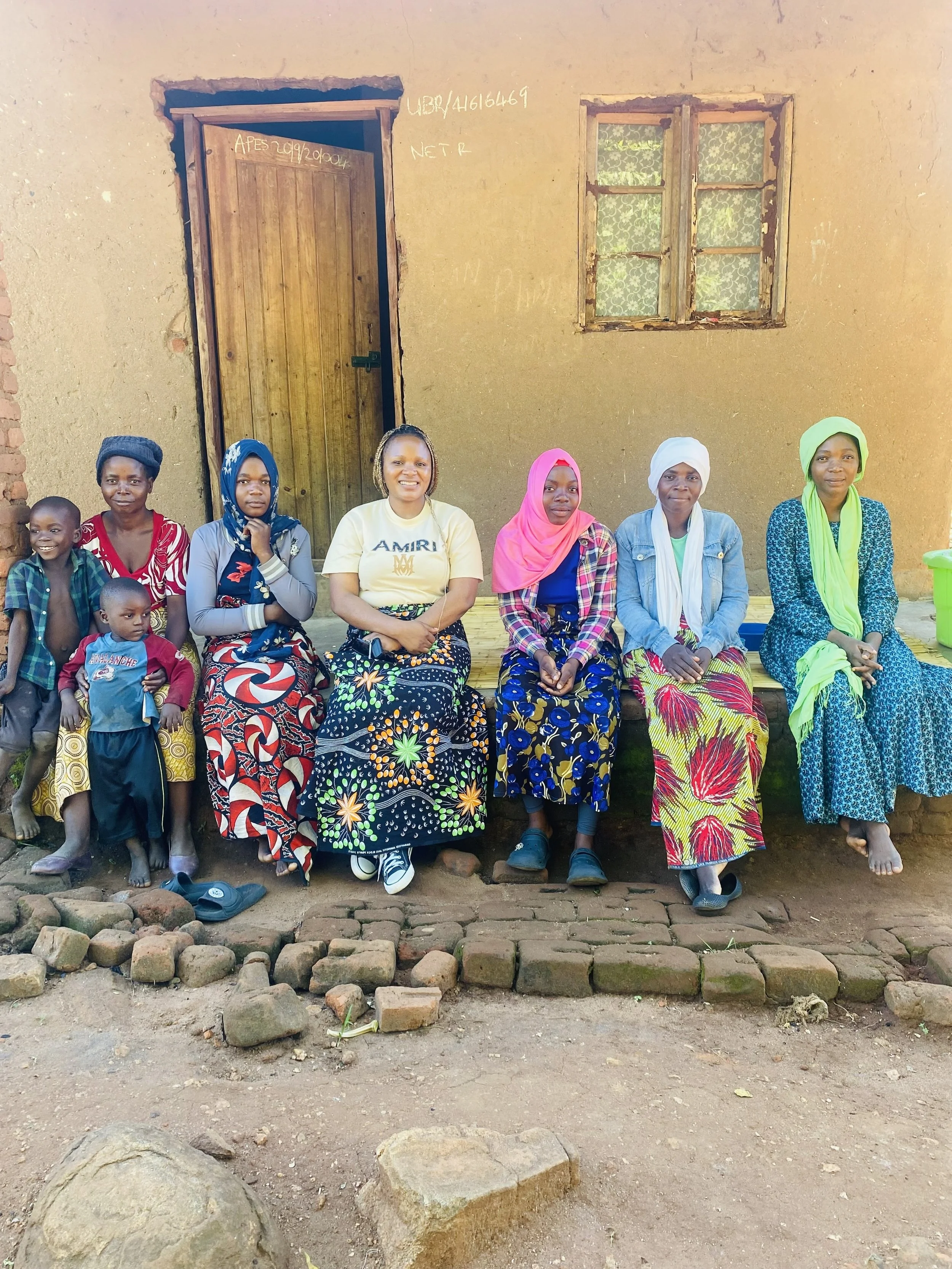
Daphney on a home visit.
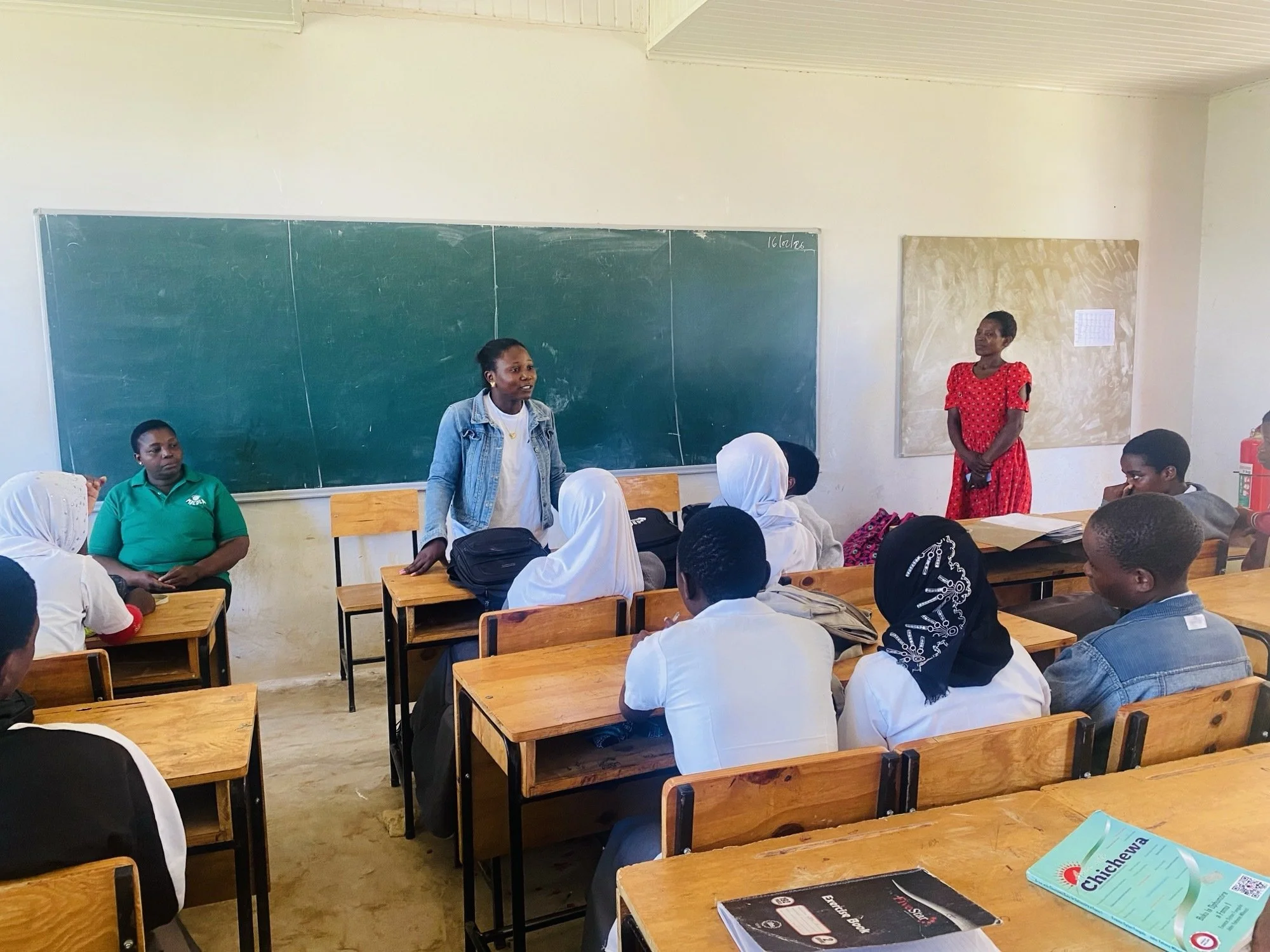
We provide sex and relationship education for both boys and girls through our motivation days and Girls Nest Club. We have continued to improve this through our own research into knowledge and attitudes amongst our students. Our MOEP team are supported by other Mbedza staff including our HIV counsellors. This research has led to the creation of a new toolkit and we continue to improve this provision.
Our safegurding procedures contribute to keeping students in school. Our team conduct what we call pre-emptive safeguarding risk assessments. This includes safeguarding concerns in the widest sense - mistreatment, sexual exploitation, hunger and neglect to name a few. In 2025 to 2026 we had 86 students in the programme and we had at any one time between 5 to 8 active safeguarding situations. Sometimes, intervention will involve other external agencies. In many cases these situations are brought on by desperation caused by extreme poverty. Where necessary we will visit the home more regularly and create tailored packages of support.
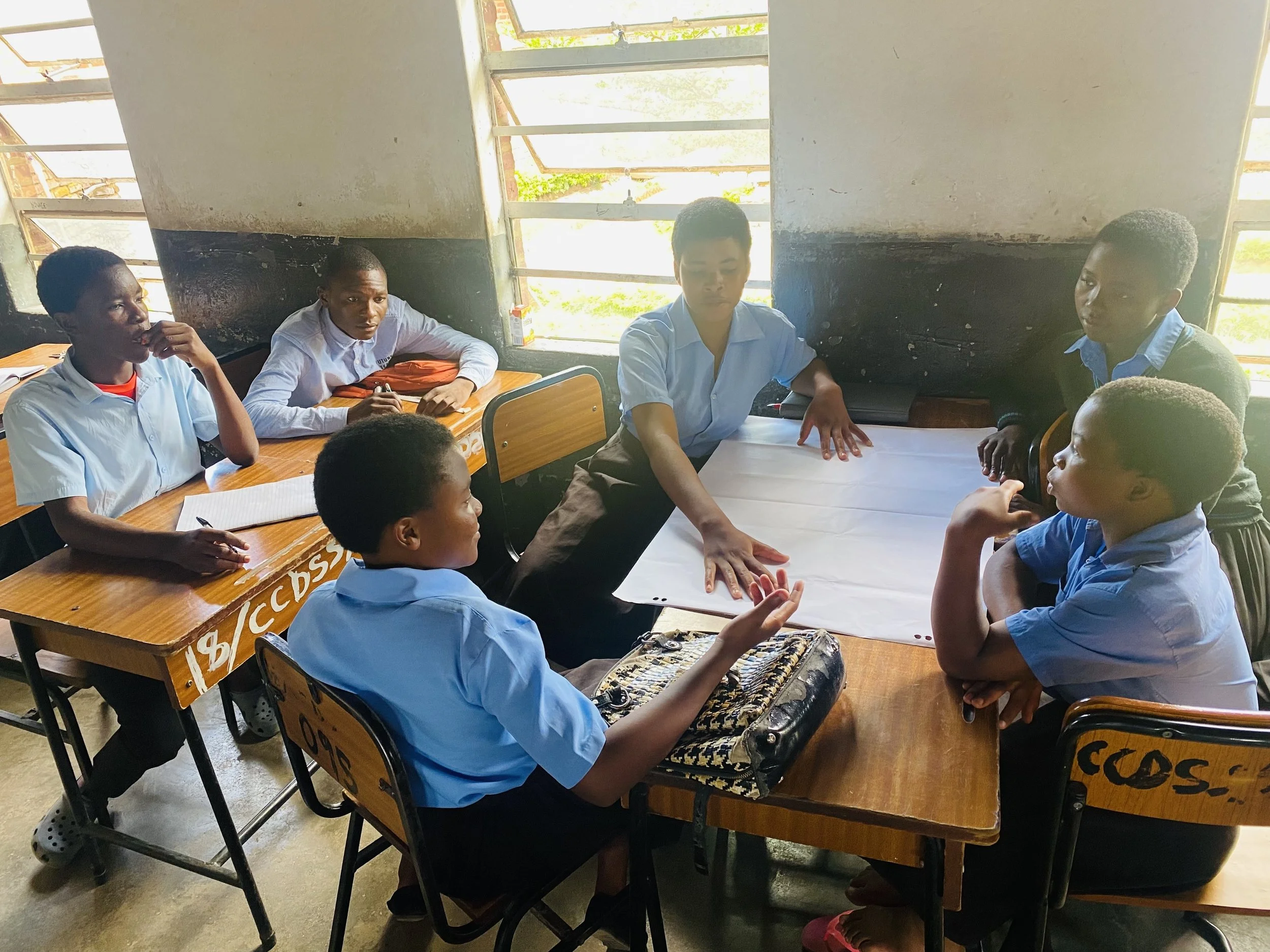
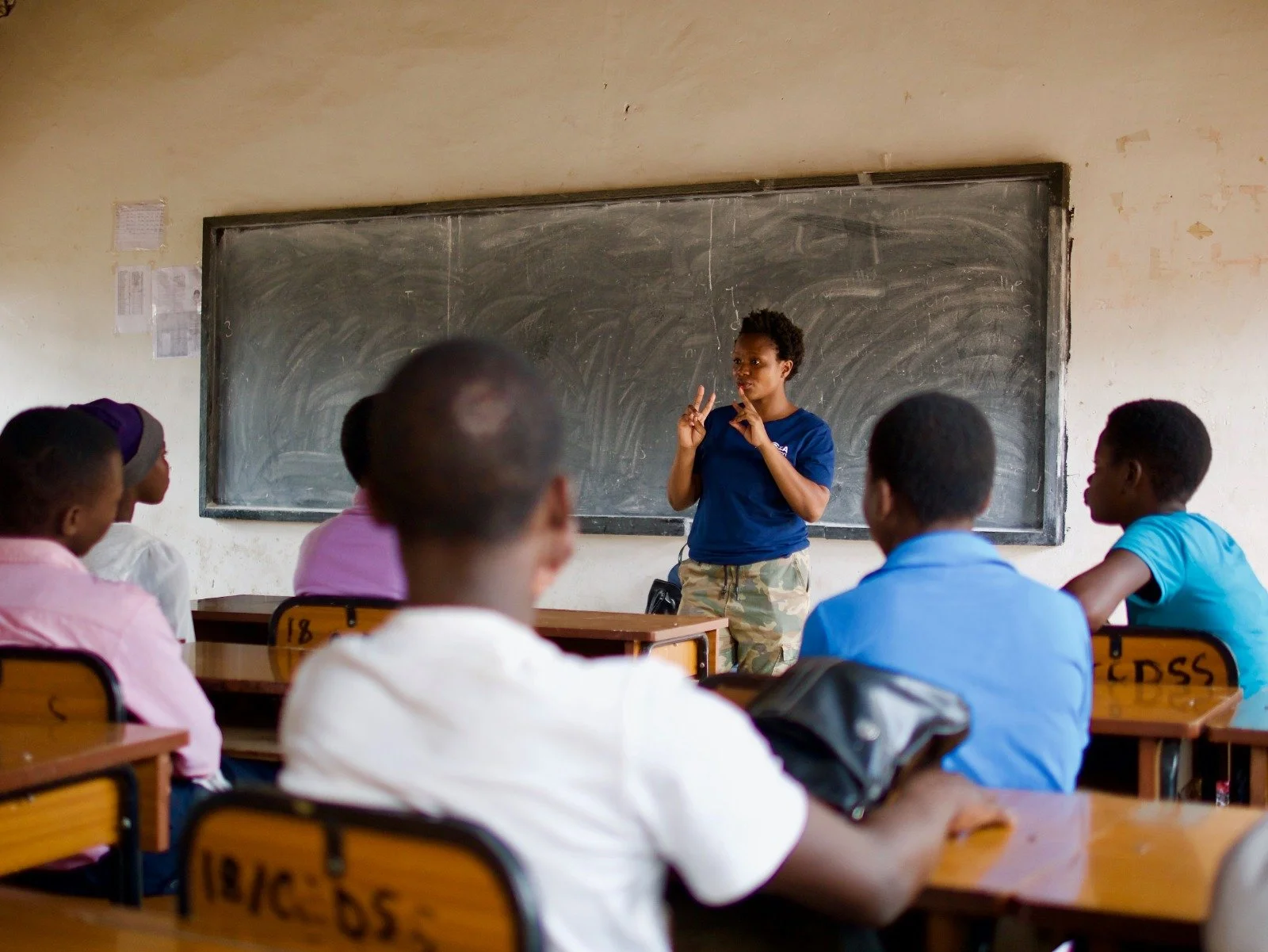
MOEP students at a motivation day
Although we don’t make exam results our main success criteria, our results are very positive. We encourage our students to take part in study circles and in the final year provide the opportunity for extra lessons. Our MSCE results are often above national average. At Mallindi school the top performing student this year is one of our MOEP students, Nathaniel, and we celebrate with him and his success.
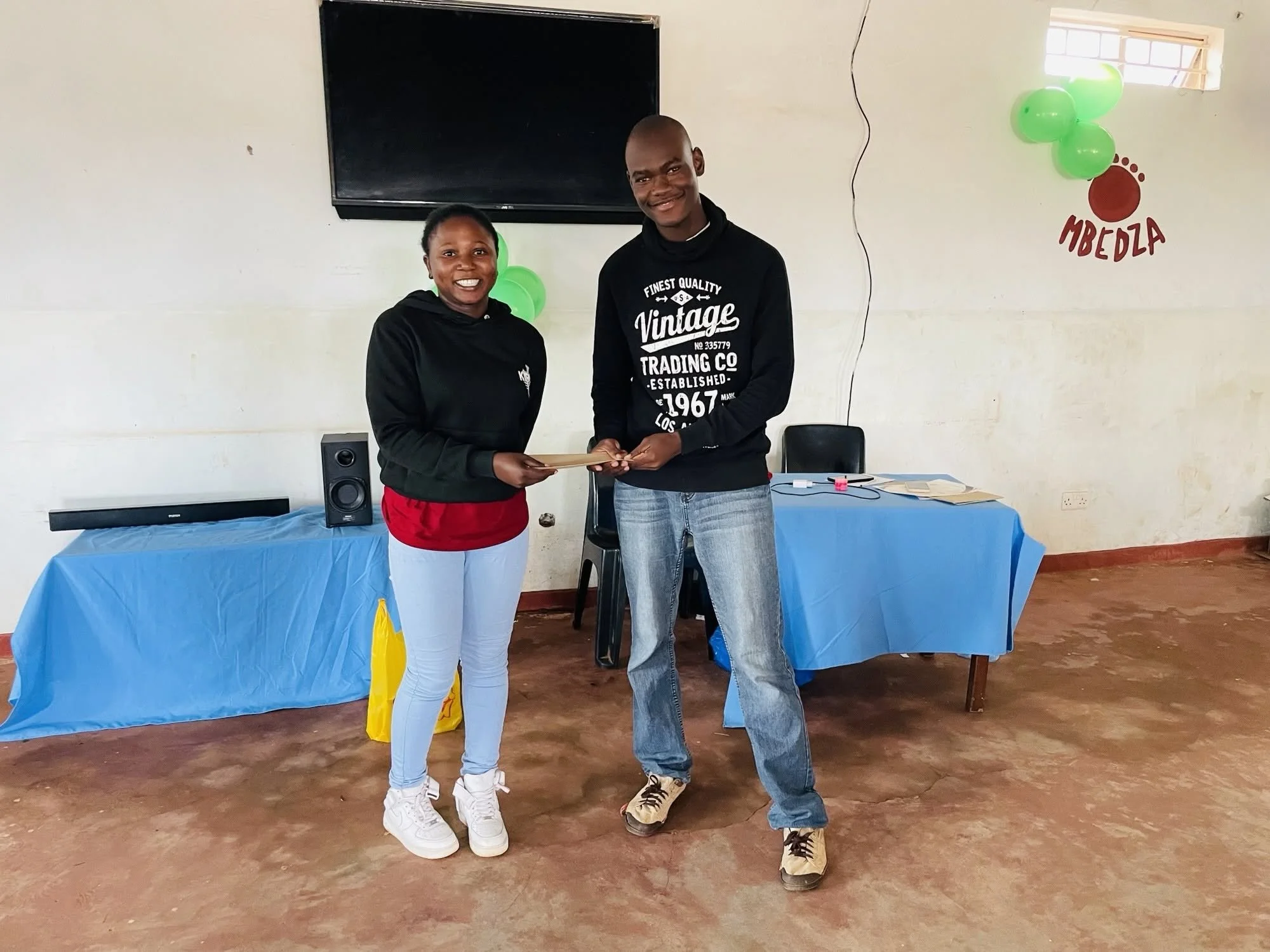
Prisca congratulates Nathaniel on his success.
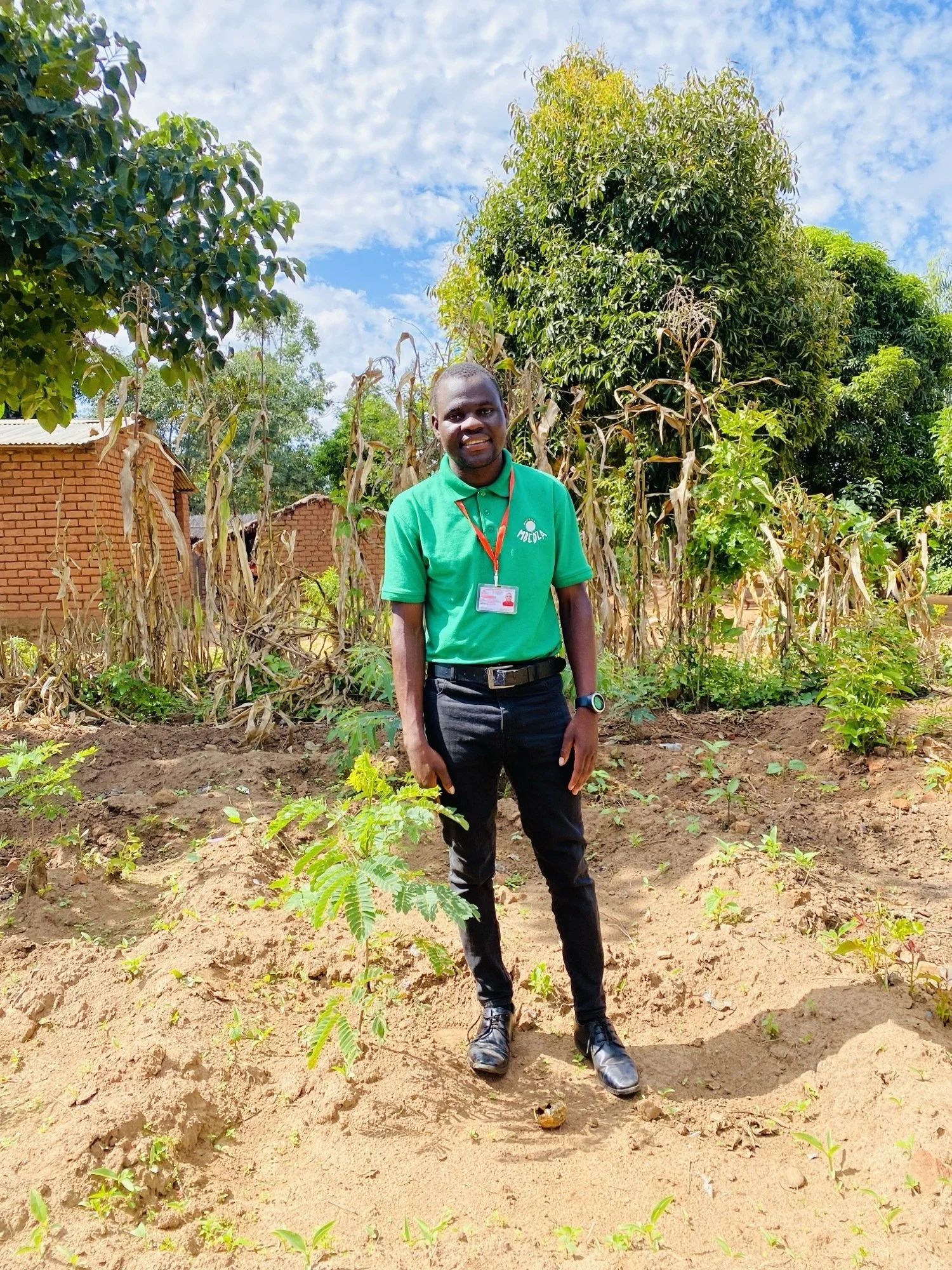
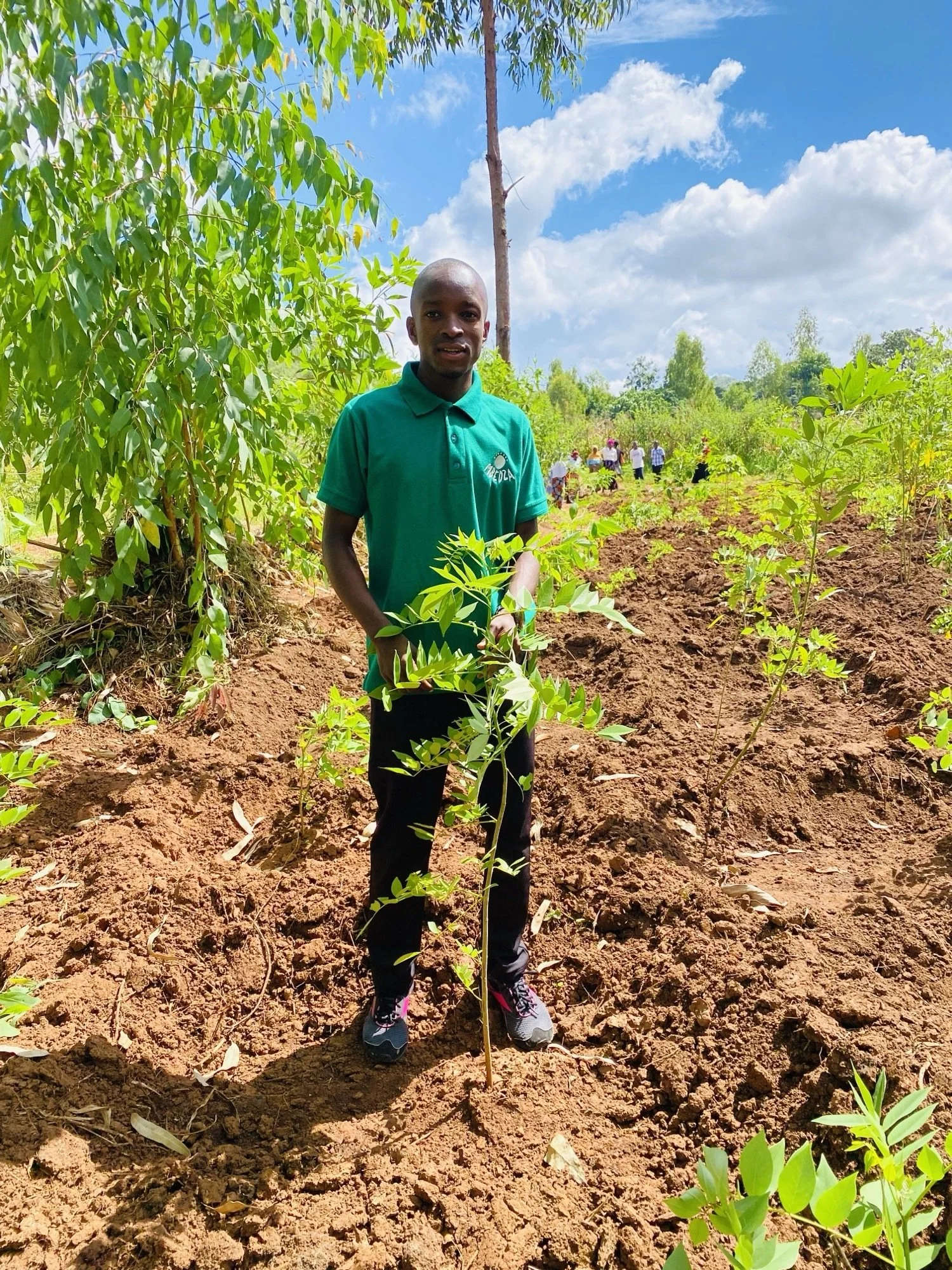
Moving from secondary school to other education and work in Malawi is extremely difficult. Being one of the economically poorest countries in the world (ranking 172 out of 193 on the Human Development Index) provides very few opportunities for young people for work. Climate change shocks, cyclones, poor harvests and sustained high inflation have been crippling. The current El Nino is projected to cause a GDP reduction of 2.9% this year. We count it a success therefore that in recent years we have been able to employ two MOEP students as part of our Mbedza environment team. James and Kenneth joined us in 2023. I still remember the day they we offered jobs and when asked ‘what does this mean to you’ they said - ‘it means we can put food on the table.’ To add to this now we are creating two more part time positions for MOEP students to join our environemt team in October 2026. (photo; James and Kenneth).
Since 2023 inflation has been over 30% and it has been difficult to sustain all the provisions in our programme. In particular the price of maize has meant that sustaining our food support has been very difficult. The reality is that our monthly support from our sponsors does not cover the cost of the programme and for each of the last three years the shortfall has been around £6000-£7000. We count it a success therefore that we have been able to fill this gap and are particularly grateful to the Coles-Medlock Foundation for their assistance as well as other donors who have contributed with one-off donations.
Finally, our success is down to two amazing staff - Daphney Phiri and Prisca Ibbu, as well as the wider Mbedza team who interact with our students in different capacities. Daphney and Prisca go beyond the call of duty in supporting our students. Photos - Daphney and Prisca.
I think we are succeeding. To our monthly sponsors and other donors, you are making such a big difference in the lives of these young people and we are very grateful.
Julian Watson
UK Director